
FORSCHUNG 2026
– geförderte Projekte
Identification of ketamine illicit use patterns by combining wastewater analysis and prescription data
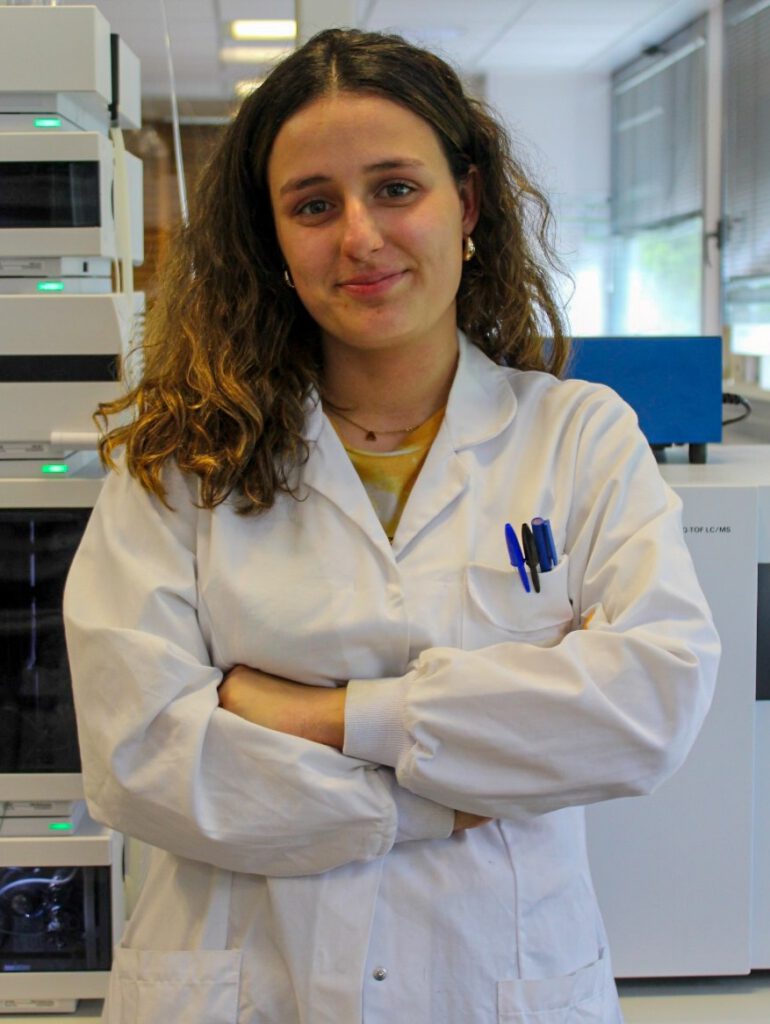
Dr. Andrea Estévez Danta
University of Santiago de Compostela (Spain) / Aquatic One Health Research Center (ARCUS)
andreaestevez.danta@usc.es
Abstract
Alcohol use disorder (AUD) is a significant global mental health challenge, leading to increased morbidity and mortality worldwide. While task-based functional magnetic resonance imaging (tb-fMRI) studies have shown promise in elucidating its neural mechanisms and establishing biomarkers, scaling up these studies is challenging due to cognitive demands and the need for extensive subject training to perform the cognitive task. To address this, we have developed an innovative artificial neural network-based approach, DeepTaskGen, which generates synthetic non-acquired task-based brain activations from resting-state brain activity (rs-fMRI), which is relatively simpler to acquire. We have already extensively validated our approach on multiple large-scale datasets comprising over 20,000 healthy individuals. However, further validation on clinical samples is essential and urgently required. This project aims to apply our innovative approach to AUD, enabling a large-scale study of AUD-related task-based biomarkers without labor-intensive experimental tasks. This would drastically reduce costs for brain image acquisition and revive datasets lacking task-based brain images. Specifically, we will adapt our approach to a large AUD sample (TRR265) with available task-based and resting-state images. This will allow us to compare the predictive performance of acquired and synthetic tb-fMRI biomarkers. For validation, we will generate synthetic task-based brain images in a separate sample of severely affected AUD patients (FOR1617) to assess generalizability. This project will provide significant evidence of our approach’s potential to enhance the predictive power of neural biomarkers associated with AUD and foster practical clinical applications.
Lay summary
This project seeks to advance the study of alcohol use disorder (AUD) by applying artificial intelligence to generate synthetic brain activity. This innovative approach eliminates the need for effortful cognitive tasks, facilitating the identification of AUD-related neural processes on a large scale, which is required to develop effective diagnosis and treatment.
tba